.png&w=640&q=75)
Why Rixdorf Is a Small Story of Democracy
Rixdorf looks like an ordinary Berlin neighbourhood: cobblestones, old courtyards, a village green with a forge. But look closer and you find a small story of democracy here — told not by kings and grand politics, but by ordinary people who shaped their own place.
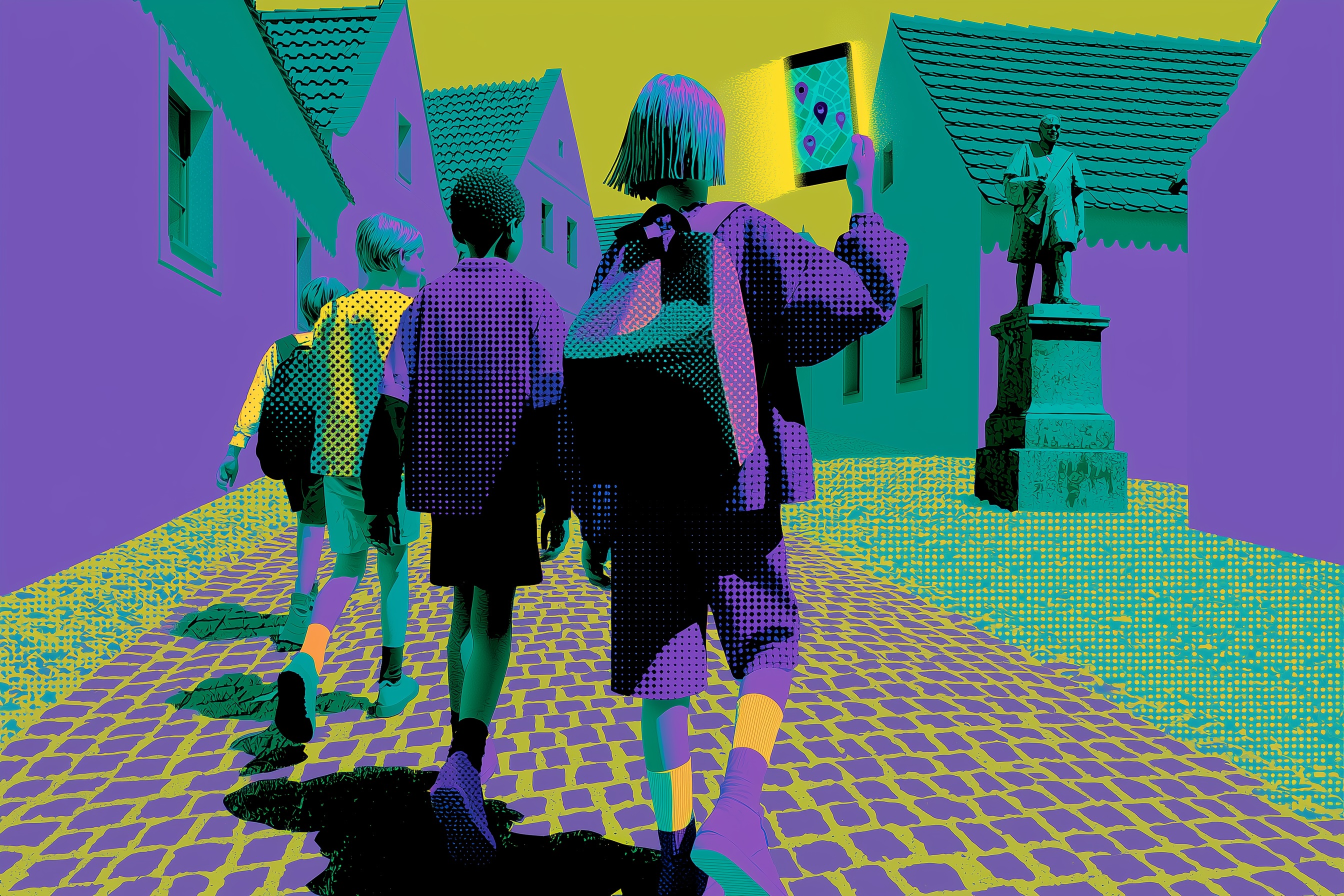
People who stood up for their beliefs
In 1737 the first Bohemian families came to Rixdorf. They had left their homeland because they would not give up their Protestant faith — in the Catholic Habsburg empire they were persecuted for it. King Friedrich Wilhelm I granted them asylum and the right to practise their faith freely; eighteen families were settled in Rixdorf in 1737. Standing up for your own conviction, even against power: that is a very early, very concrete democratic value.
A village that governed itself
Bohemian Rixdorf long organised its own affairs. The Bohemian families elected their own village mayor, the Schulze — community leader, judge and police officer in one person. Once a year disputes were heard at his court on Richardplatz. That independence lasted until the merger with German Rixdorf in 1874. Not everyone had a say, though. Participation was far more restricted than it is today: women and children were not equal participants, and who exactly could vote depended on the local rules and property arrangements of the time. That makes it a good place to ask children who was allowed to decide about rules and disputes back then — and who was not.
Building from nothing
The Bohemian families built a new life in Rixdorf — houses, courtyards, a congregation that shapes the place to this day. Descendants of some families still live around Richardplatz. Migration is no footnote here but the founding story: participation and building as local history.
Education for all: Comenius
The namesake of the Comenius Garden, Johann Amos Comenius, was himself a religious refugee and the last bishop of the old Unity of the Bohemian Brethren — the tradition the Herrnhut Moravian Church continues today. His guiding idea: learning is for everyone. A deeply democratic ideal, because education is the basis of participation. And to persecution he responded not with resignation but with creating: he wrote the world's first picture textbook, the Orbis Pictus. It is exactly this attitude — making something new out of hardship — that Localnauts passes on.
What kids take from it today
All of this works without wagging a finger. No appeal, no pressure — just the quiet invitation to think for yourself: what would I build? What would I stand up for? While playing, the kids experience that people like them made this neighbourhood. They decide as a team, dare to try things and see Rixdorf with new eyes. It works — for the kids and for the adults walking along.
With Localnauts the Bohemian Village becomes a walkable time-travel to 1737: across ten stations a crew solves puzzles, follows a family of back then and finds the lost chest at the end. A web app in the browser, for kids aged 8 to 12.
Discover Rixdorf yourself →The interactive GPS scavenger hunt for families – now playable in Berlin-Rixdorf.
Frequently asked
Rixdorf shows democracy in a small and concrete way: people who in 1737 stood up for their faith, governed themselves, built a new life and held education for all in high regard (Comenius). Not a school subject, but history you can touch.
No. The democracy layer is the foundation, not the headline — on the surface, the adventure leads. The kids experience self-efficacy and shared decision-making through play, without any lecturing.
From archives, museums and specialist sources on Bohemian Rixdorf — among them the Moravian Church in Berlin and local history. All the evidence is openly listed on our sources page.