.png&w=640&q=75)
Media literacy is more than 'not too much phone'
When it comes to children and media, the conversation is usually about bans and minutes. But the real task is a very different one — and it keeps getting more important.
According to the KIM 2024 study by Germany's mpfs media-education research group, 70 percent of 6- to 13-year-olds use the internet. Among the youngest (6 to 7 years) it is 37 percent, among 12- to 13-year-olds almost all of them. Nearly half of the children have their own device. The question is no longer whether but how children deal with media.
What media literacy really means
The media educator Dieter Baacke coined the term — and it means far more than 'less phone'. Media literacy involves four abilities: understanding media (how do they work?), judging media critically (is this true? who wants what from me here?), using media sensibly and even creating media yourself. The goal is not passive consumption but a self-determined, creative use.
The core: being able to judge
Most important — especially in times of AI, advertising and fake news — is critical judgement: can children tell information from opinion or advertising? Do they ask where something comes from? You don't learn that through bans, but through practice — ideally together, on real examples.
Also a question of opportunity
Media literacy is not only about parenting, it is also about fairness. Research including at the WZB Berlin Social Science Center shows that digitalisation affects children unequally: schools in disadvantaged areas are often less well equipped, and not every child learns confident media use at home. Fostering media literacy fosters participation.
What this has to do with Localnauts
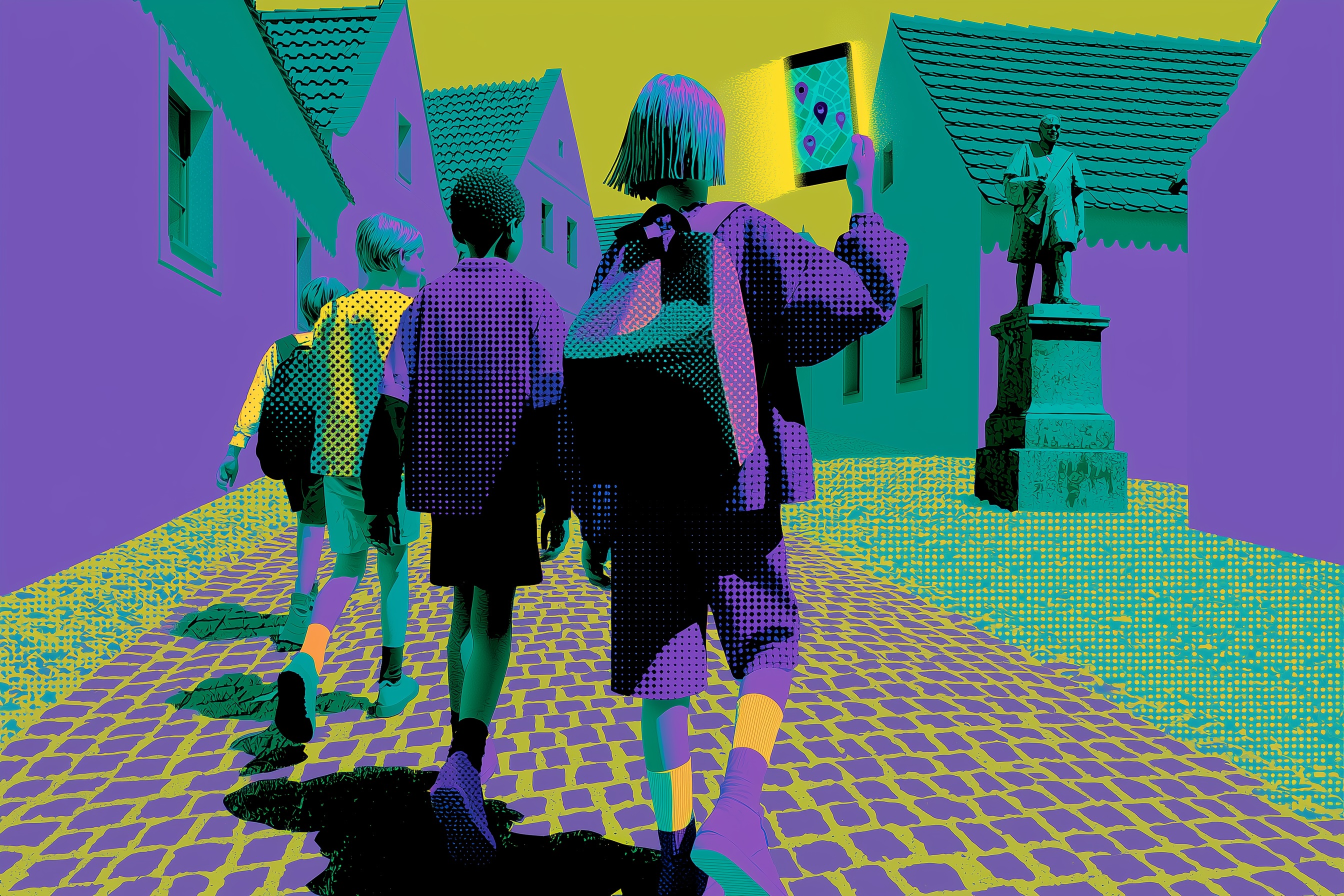
A game doesn't turn anyone into a media expert overnight — we don't claim that. But there is a small building block in it: in Localnauts, kids check traces on site and compare what the device shows with what they actually see — and every fact in the game is backed by a source. That is media criticism in miniature: look, question, verify for yourself. Deeper mechanics like spotting advertising, data trails or fake news are our path for the future, not a promise for today.
What parents can do
Join in rather than just limit: search together, ask together 'how do we actually know that?'. Take children seriously when they show you something. And model how you check sources yourself — children copy what they see. In the end, media literacy isn't fear of media, but confidence in handling them.
The interactive GPS scavenger hunt for families – now playable in Berlin-Rixdorf.
Frequently asked
According to media educator Dieter Baacke, media literacy comprises four abilities: understanding media, judging them critically, using them sensibly and creating them yourself. So it is about self-determined, creative use — not just less screen time.
Above all together: watch content with your child, ask 'where does this come from?', model how you check sources yourself, and trust your child to think along. Bans alone don't build competence.
Early. According to the KIM 2024 study, 37 percent of 6- to 7-year-olds already use the internet, and among 12- to 13-year-olds almost all do. The earlier children are accompanied, the better.